Elemind review
An unusually serious attempt at a sleep wearable — a headband that reads brain activity and answers with precisely timed sound to nudge you toward sleep. The approach is scientifically interesting and the team credible, but the independent evidence base is young, responses vary person to person, and chronic insomnia belongs with a clinician, not a gadget.
What we like
- Real-time brain-signal reading with responsive audio is a genuinely novel approach
- Drug-free angle appeals to people wary of sleep medication
- Founded on published neuroscience research rather than wellness vibes
- Position-tracking of your own sleep patterns has standalone value
Flaws but not dealbreakers
- Independent, large-scale evidence for this approach is still accumulating
- Individual responses to acoustic stimulation vary widely — no guarantee yours cooperates
- Wearing a headband to bed is a comfort commitment not everyone sustains
- Premium pricing for outcomes that remain personal and probabilistic
- Not a medical device and not a treatment for diagnosed sleep disorders
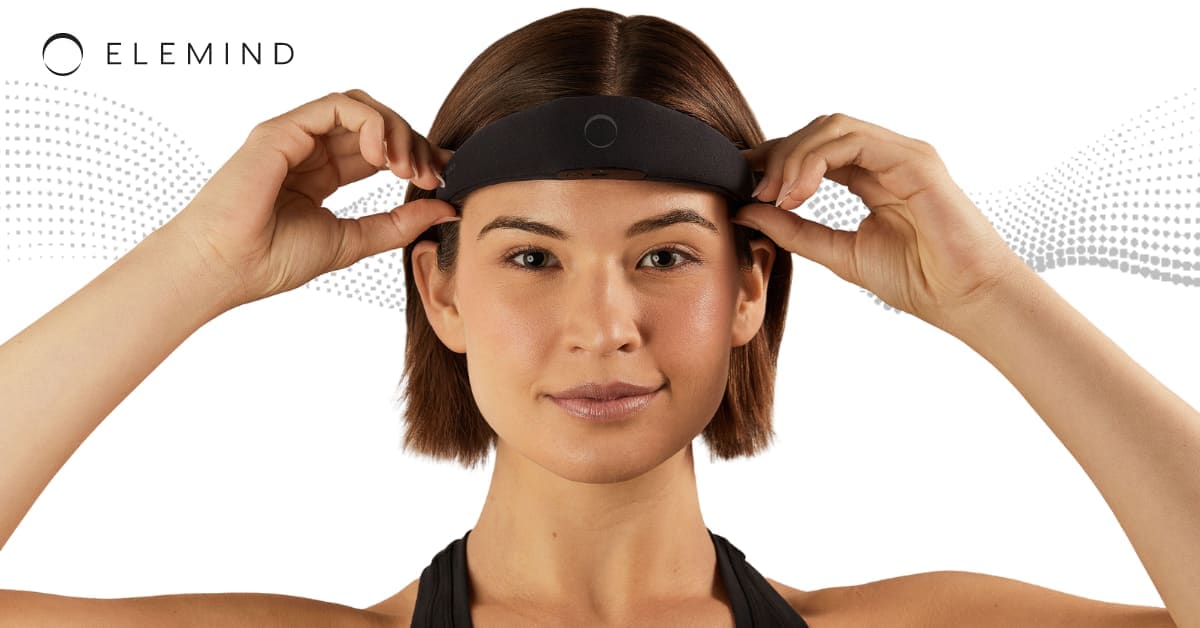
Most sleep gadgets are trackers: they watch you sleep badly and present charts about it in the morning. Elemind belongs to a rarer and more interesting species — an intervention device. The headband reads electrical activity from your brain in real time and plays precisely timed audio intended to interact with those rhythms, with the goal of easing the transition into sleep. Whether that ambition survives contact with your particular brain is the entire question, and it deserves a more careful answer than either hype or dismissal.
The approach has legitimate scientific lineage. Timing sound to ongoing brain oscillations — rather than playing generic white noise — is an active area of neuroscience research, and the company emerged from serious academic work rather than a crowdfunding mood board. That distinguishes it from the ocean of 'sleep tech' whose mechanism is essentially a speaker and a claim. It does not, however, settle the practical question: peer-reviewed foundations for a technique are not the same thing as broad, independent, real-world evidence that a consumer product built on it delivers for most buyers. That evidence base is young and still accumulating, and we'd characterize the science as promising rather than proven.
The second honest caveat is variability. Sleep interventions of every kind — behavioral, acoustic, pharmaceutical — show wide differences between individuals, and acoustic stimulation is no exception. Some users describe faster wind-downs; others notice little. A device whose benefit is probabilistic and personal is not a scam, but it is a different purchase from a kettle: you are funding an experiment with one participant, and you should only do that with money you can cheerfully lose to a null result. Comfort is part of that experiment too — a sensor band on your forehead all night is something adaptable sleepers stop noticing and light sleepers never do.
Now the boundary that matters most. If you have chronic insomnia — months of bad sleep, daytime impairment, dread of your own bed — the front-line, best-evidenced treatment is cognitive behavioral therapy for insomnia delivered by a clinician, and possible underlying conditions like sleep apnea need actual medical screening. No consumer headband is a substitute for that pathway, and this one doesn't claim to be. The right audience here is the merely-bad sleeper who has already fixed the boring fundamentals — consistent schedule, dark cool room, caffeine discipline, screens out of bed — and wants to experiment beyond them.
It's also fair to note what you get even if the stimulation underwhelms you: a detailed picture of your own sleep architecture from a sensor genuinely closer to the action than a wristband. For some buyers that data alone justifies part of the price; for others it's a consolation prize. Check the current returns policy before buying — with a device this individual, the trial window is effectively part of the product.
Our rating lands deliberately in the middle: real science, real novelty, real uncertainty. Elemind is among the most credible entries in a category thick with nonsense, and that is both praise and a reminder of the category it's standing in. Approach it as a well-founded experiment, keep your expectations probabilistic, and see a doctor first if your sleep problem is the kind that runs your life.
Key specs
- Type
- Neurotech sleep headband — EEG sensing with acoustic stimulation
- Best for
- Curious, well-resourced poor sleepers who've fixed the basics first
- Not for
- Replacing medical care for chronic insomnia or sleep disorders